
Produced by: Tarun Mishra Designed by: Manoj Kumar
Milestone Announcement
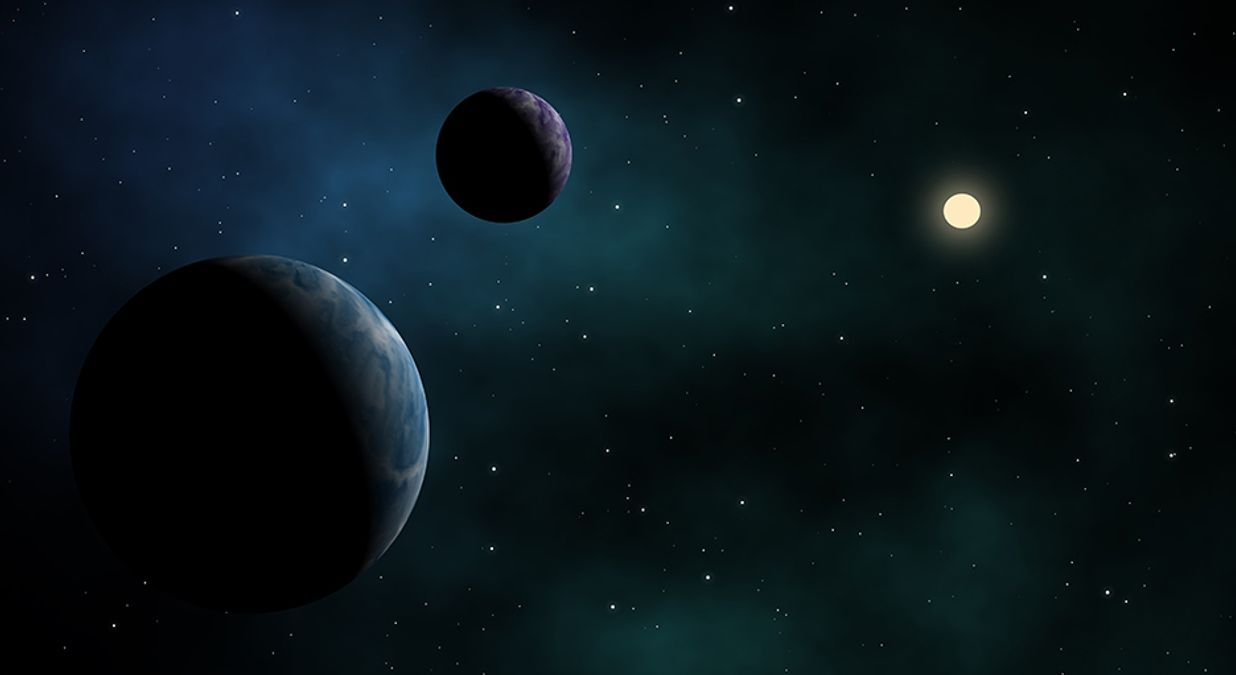
NASA has unveiled a groundbreaking discovery, adding six new planets to the tally of confirmed exoplanets, now totalling 5,502, marking a significant leap in our understanding of the universe and potential for extraterrestrial life.
Origins of Exoplanet Discovery
About 31 years ago, scientists confirmed the existence of the first exoplanets, Poltergeist and Phobetor, orbiting the pulsar PSR B1257+12. Since then, the count has surpassed 5,000 by March 2022.
Diverse Characteristics
The newly discovered exoplanets exhibit a diverse array of characteristics: – HD 36384 b, a super-Jupiter orbiting an enormous M giant star. – TOI-198 b, a potentially rocky planet within its star’s habitable zone. – TOI-2095 b and TOI-2095 c, hot super-Earths orbiting the same M dwarf star. – TOI-4860 b, a rare “hot Jupiter” completing an orbit every 1.52 days. – MWC 758 c, a giant protoplanet orbiting a young star with a protoplanetary disk.
Discovery Methods
These discoveries employed various detection methods: – Radial velocity technique, measuring stellar wobble caused by orbiting planets. – Transit method, detecting starlight dimming as planets pass in front of their host stars. – Direct imaging, utilized for identifying MWC 758 c.
Exponential Growth in Exoplanet Science
Since 1992, the field of exoplanet science has seen rapid growth, aided significantly by NASA’s Transiting Exoplanet Survey Satellite (TESS) launched in 2018, which has identified thousands of exoplanet candidates.
Contributions of Space Telescopes
Space telescopes like Spitzer, Hubble, and the James Webb Space Telescope have also played pivotal roles in advancing exoplanet research.
Future Prospects
NASA plans to launch the Nancy Grace Roman Space Telescope in May 2027, equipped with a coronagraph to directly image exoplanets, potentially leading to missions like the Habitable Worlds Observatory, aimed at detecting signs of life on exoplanets.
Evolution of Exoplanet Discovery
From no confirmed exoplanets three decades ago to over 5,500 today, the pace of discovery highlights significant advancements in our exploration of distant worlds.
Implications for Understanding the Universe
As our knowledge of exoplanets expands, so does the prospect of finding habitable planets and addressing fundamental questions about our cosmic existence.