
Produced by: Tarun Mishra Designed by: Manoj Kumar
Prolonged Stay on ISS for Sunita Williams and Butch Wilmore
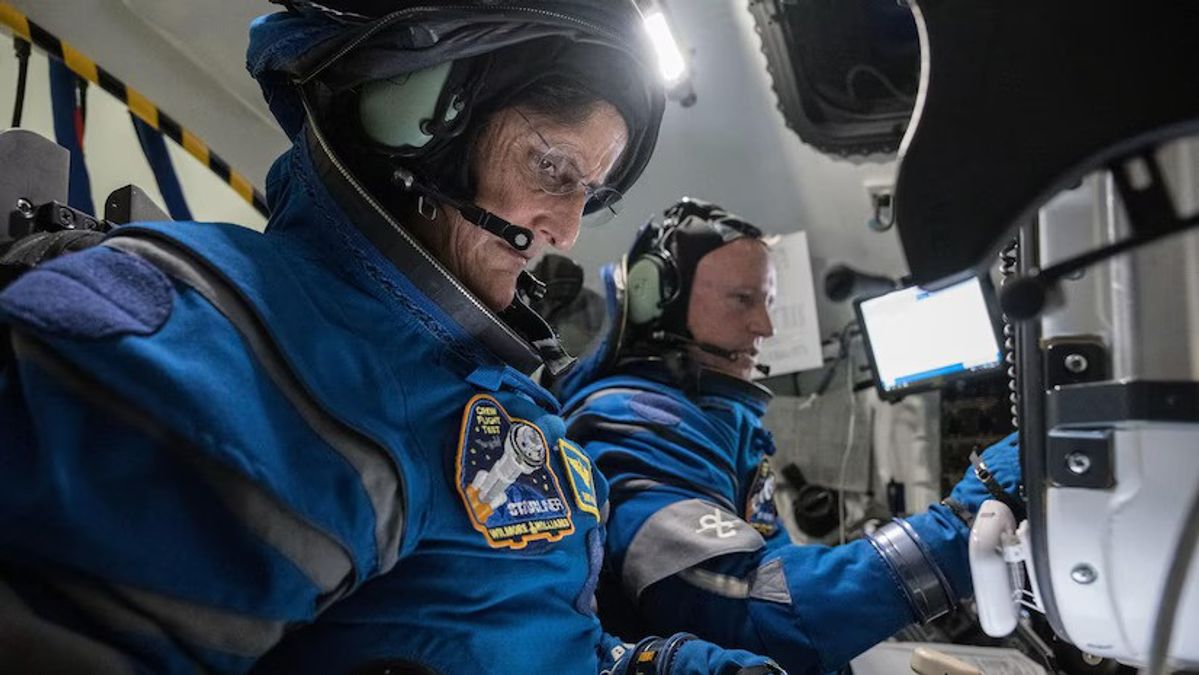
NASA astronauts Sunita Williams and Butch Wilmore have been on the International Space Station (ISS) for 52 days, far exceeding their planned nine-day mission due to two failed attempts to return to Earth.
Health Concerns During Extended Mission
The extended stay raises concerns about the astronauts’ health, including potential loss of bone density and muscle mass, which are common issues during long-duration space missions.
Critical Countdown to Return
With only 16 days remaining to safely bring Williams and Wilmore back, the mission faces a critical period. The urgency is heightened by the risk of technical issues with the Boeing Starliner spacecraft.
Risk of Thruster Failure
One significant concern is the potential failure of the Starliner’s thrusters after undocking from the ISS. If the thrusters fail, the spacecraft may not be able to enter the correct trajectory for re-entry to Earth.
Possibility of Getting Lost in Space
In the worst-case scenario, if the Starliner loses all its thrusters, the spacecraft could become lost in space along with the astronauts. This would be a dire situation with limited options for recovery.
Historical Context of Spaceflight Fatalities
Historically, space exploration has seen fatalities, with 20 people having died since the beginning of human spaceflight. Notable incidents include the Space Shuttle disasters of 1986 and 2003, and the Soyuz 11 mission in 1971.
Protocols for Death in Space
NASA has protocols for handling deaths in space. If an astronaut were to die in orbit, the body could be returned to Earth relatively quickly. However, missions to more distant locations like Mars would present unique challenges in body preservation and return.
Psychological and Logistical Considerations
Beyond the physical handling of remains, the psychological impact on the crew and the grieving process for families on Earth are critical aspects. NASA must plan for these scenarios as space missions, including potential crewed missions to Mars, become more ambitious.