
Produced by: Tarun Mishra Designed by: Manoj Kumar
End of Cassini Mission
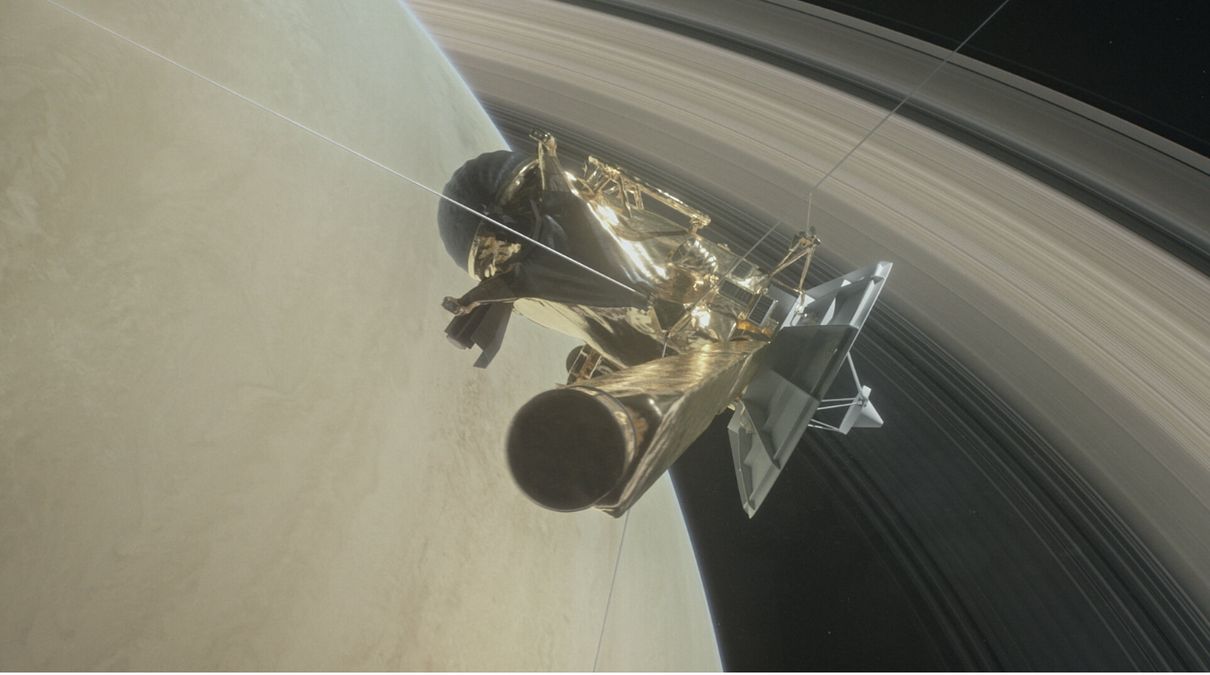
NASA’s Cassini-Huygens spacecraft ended its 20-year mission in 2017 by plunging into Saturn, but it continues to provide valuable scientific data.
New Findings from Titan
Using radar data from Cassini, Cornell University astronomers have uncovered new details about Titan’s liquid ocean, composed of hydrocarbons like methane and ethane.
Calm Seas on Titan
Researchers analyzed the “roughness” and composition of Titan’s seas near its north pole, finding calm seas of methane with gentle tidal currents, a revelation not seen in prior examinations.
Ballistic Radar Technique
Cassini used ballistic radar to collect data, sending a radio beam to Titan and reflecting it back to Earth. This provided a more complete dataset compared to standard radar.
Enhanced Data
Valerio Poggiali from Cornell highlighted that the bistatic information from ballistic radar is more sensitive to both surface composition and roughness, offering dual perspectives of Titan’s seas.
Polar Seas Analysis
Data collected during Cassini’s flybys in 2014 and 2016 were used to study Titan’s Kraken Mare, Ligeia Mare, and Punga Mare. The team found location and latitude-dependent variations in the hydrocarbon seas’ surface layers.
Surface Reflections
The southernmost part of Kraken Mare was most efficient in reflecting radar signals. All three seas appeared calm, with wave heights averaging around 3.3 millimeters, increasing to 5.2 millimeters near the coast.
Methane and Ethane Rivers
Indications suggest rivers on Titan are pure methane until they mix with ethane-rich seas, similar to Earth’s freshwater rivers mixing with salty oceans. This aligns with meteorological models predicting predominantly methane rainfall on Titan.
Future Discoveries
Poggiali emphasized the vast amount of Cassini data still awaiting analysis, suggesting more discoveries to come. The team’s research was published in the journal Nature Communications on July 16.