
Produced by: Tarun Mishra Designed by: Manoj Kumar
Scientists Discover Large Water Reservoir on Mars
Using seismic data from NASA’s InSight lander, geophysicists have identified a large underground reservoir of liquid water on Mars, potentially enough to fill ancient Martian oceans.
Water Located Deep in Martian Crust
The reservoir is situated between 11.5 and 20 kilometres below the planet’s surface, far deeper than what is accessible for future human colonization efforts.
Reservoir Not Easily Tapped for Colonization
The water is contained in small cracks and pores within rock formations, making it nearly impossible to access, even with advanced drilling techniques. On Earth, drilling a kilometre deep is already a significant challenge.
Potential Implications
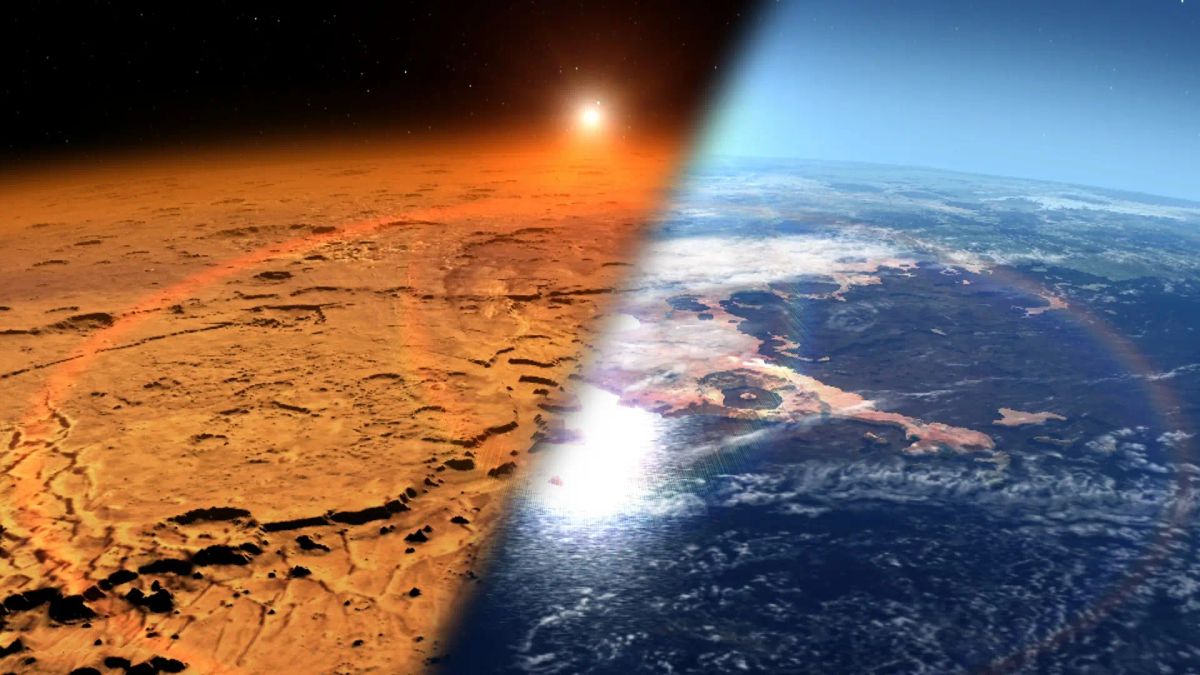
The discovery offers insight into how water may have persisted on Mars despite the disappearance of its surface oceans over 3 billion years ago, suggesting that much of the planet’s water filtered into the crust rather than escaping into space.
Insight into Martian Climate
The findings are crucial for understanding Mars’ climate evolution, water cycle, and internal structure. The research provides new clues about the planet’s transition from a wet environment to its current dry state.
Possibility of Life in the Martian Underground
Scientists believe this reservoir could be a location where life could exist, as deep underground environments on Earth are known to host life forms in extreme conditions. This discovery could guide future searches for life on Mars.
Study Published by UC Berkeley and Scripps Researchers
The research was led by scientists from UC Berkeley and Scripps Institution of Oceanography. They used models similar to those employed in terrestrial aquifer mapping to interpret the seismic data and identify the water-rich rock layer.
Seismic Data from NASA’s Insight Mission
InSight, which was deployed in 2018 and concluded its mission in 2022, provided detailed information about Mars’ crust, mantle, and core. Its seismic sensors helped detect Mars quakes and probe the planet’s interior, leading to this significant discovery.